Video transcript
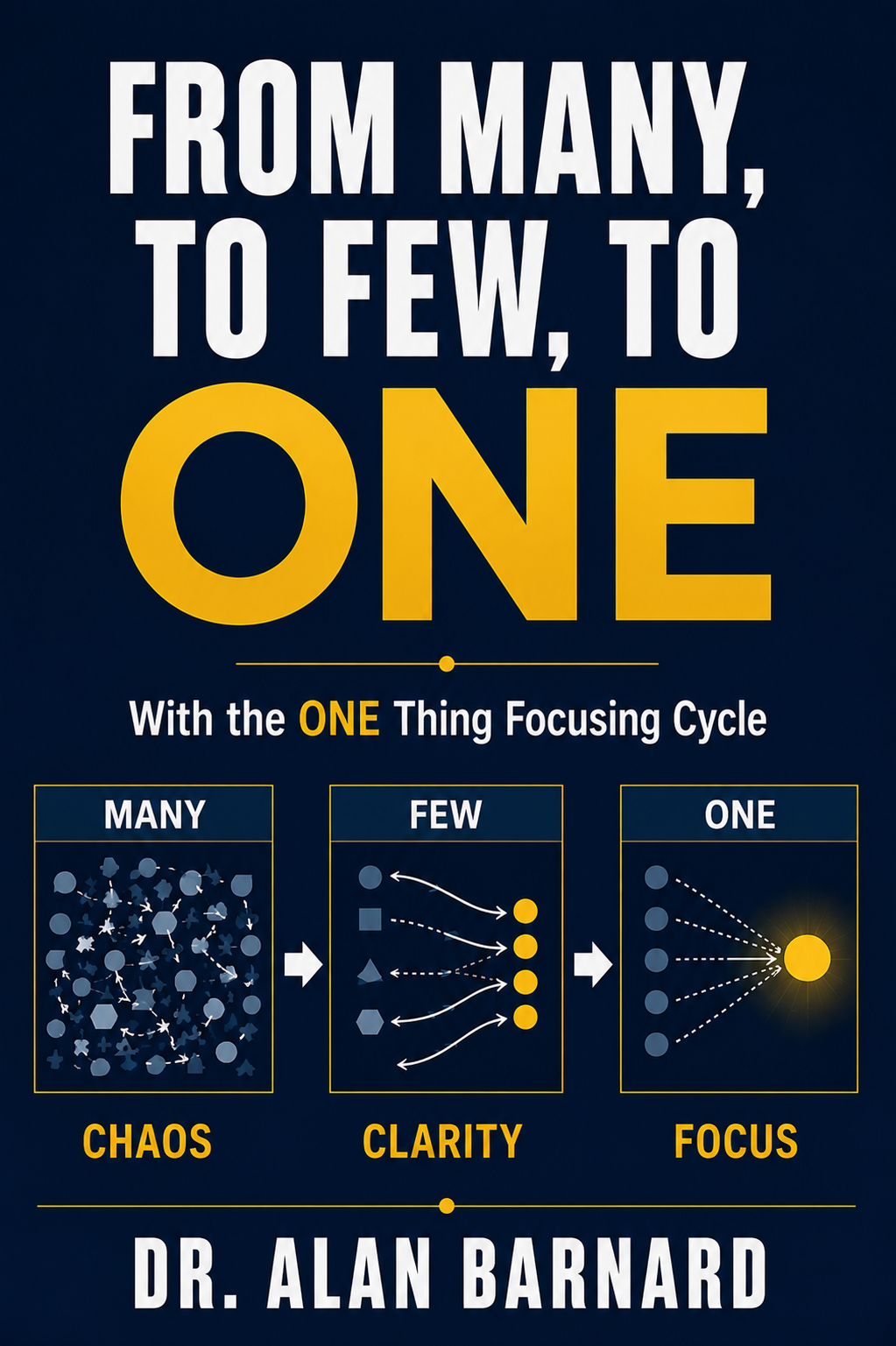
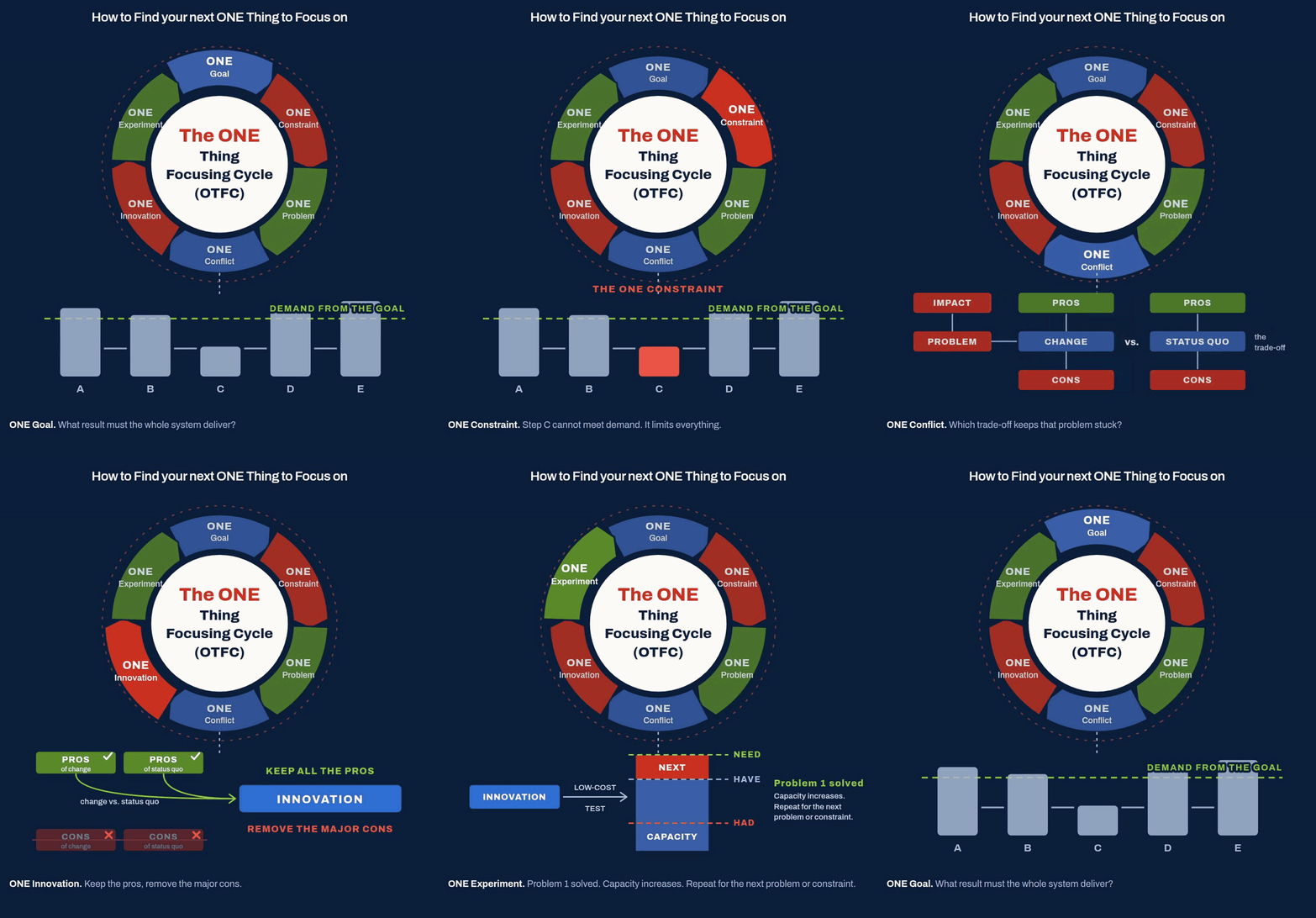
I want to end off in the last few minutes just with a slide that I think sort of captures my insights over the last 30 years of applying Theory of Constraints. I was presenting this recently to the platinum group for Tony Robbins. They gave me an opportunity to say, “How would you present Theory of Constraints in ONE slide?” And I realized that to maintain focus, you need to think about ONE-to-ONE pairings, in the same way that it was a discovery by Eli that: think strategy, tactic. Don’t think strategy tactics. There’s a strategy as the objective that you’re trying to achieve. Tactic is the best way of getting there. How do I maintain that ONE-to-ONE pairing throughout?
I have a goal. There’s work that I have to do to achieve the goal. The work follows a process. I need resources to man the process. The goal puts a demand. It tells me what I need of each resource, and then I can compare it with what I have. Any resource I don’t have enough of is a constraint. It’s a flow rate constraint. If I get more of that, I could have more of the goal. But there’s also a flow time constraint. Sometimes I have enough, but I’m not doing it fast enough. So now I’m plotting out my total lead time there. Can you notice the little cycle times of ABC as a small fraction? The majority of the time is lost in backlog or queuing, and I’m going, “What’s my flow time constraint?”
So I end up with, what is the constraint? This could be at the system level. It could be at the department level. It could be at a process level. The goal of the system is placing a demand on my department. What don’t I have enough of? Then I go ONE constraint, ONE problem. There’s now a gap between what I have and what I need. Pareto principle applies. It’s fractal. It applies on itself. What does it mean? 20% of 20% will give me 80% of 80% of that gap. I can apply it again. ONE problem typically explains 51% of that gap. That’s the ONE problem I’m looking for. Simulation is a great way to find out what that ONE problem is.
Now I have the problem. I now go to the next pairing. ONE problem, ONE conflict. Problem solving is finding a solution to a problem. Innovation is finding a solution to a problem without trade-offs. Writing out my pro-con cloud in the form of, “I feel pressure to implement the solution to solve the problem, but I have an alternative, either the status quo or another alternative.” Each of these options have pros and cons. The listing of the pros and cons help me to understand the trade-off. Helps me to understand why we get stuck, why we might overreact or underreact. And then I’m going to the next pairing, which is, now I have ONE conflict. I’m looking for ONE innovation. Find the ONE thing that can give me all the pros without any of the major cons. That’s true innovation. That’s what’s embedded into our pro-con cloud method. What’s the important problem? What’s the conflict? What’s the innovation? What’s all the yes-buts from the stakeholders? What do I have to add? And then I go from innovation to ONE experiment.
I’m doing the experiment. I’m testing out this innovation. And that’s, again, where the simulation models come in, because they can allow us to test that hypothesis about what the solution is to the ONE problem in a very low cost, low risk way without taking major risk for the company. And what I want to check is, is the problem solved? And if it is, then I repeat the cycle. Next problem or next constraint. And I can apply this process at the system level or any subsystem level. I hope that makes sense to everybody.
If you’re a subsystem, doesn’t matter how big, the question is, your goal, you can’t determine the goal. The goal has been decided on. You have to understand that goal puts a demand on your department or your process. Do you have enough? Are you doing it fast enough? Which constraint do you have? Do you have a flow rate constraint where you need to do more? Or do you have a flow time constraint where you have to do it faster to meet the requirements of the system? Regardless of which type constraint, what’s the problem? Either the problem that’s causing you to lose throughput, we must stop doing this, focus on the highest value added, or simply get more, it’s an elevation conflict. Or if it’s a flow time constraint, what’s causing the most delay? And that’s the cycle that we go through. I hope that was useful and I’m looking forward to all the comments and questions. I’m sure that there’s going to be a lot of challenges as well. Thank you.